Turn Your Smart Meter Into a Household Energy Detective
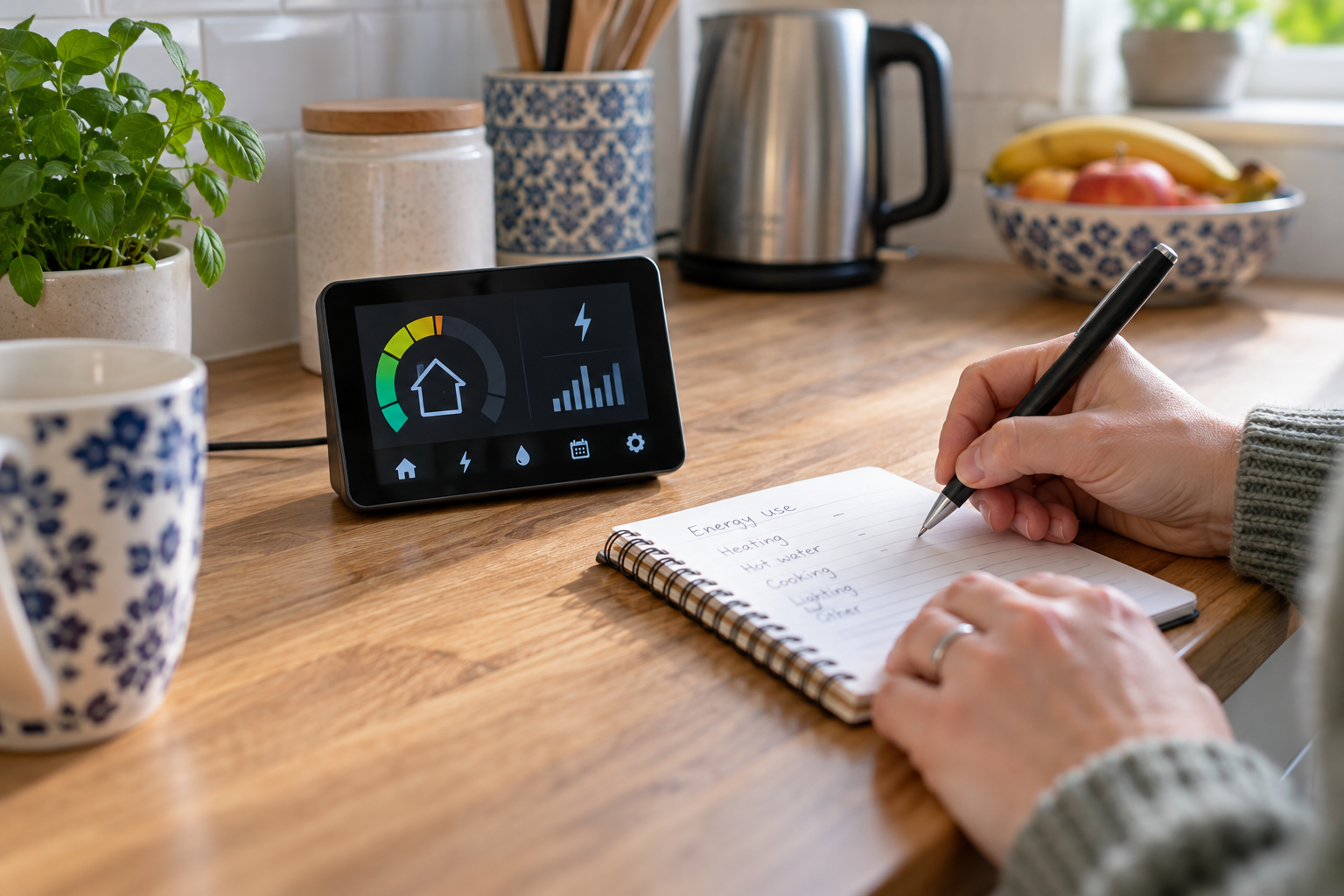
A smart meter will not save energy by itself. It cannot switch off a forgotten heater or persuade anyone to fill the kettle with less water. What it can do is make invisible energy use visible, and that turns it into a useful household detective rather than another screen gathering dust on a shelf.
The in-home display normally shows energy use in pounds and pence as well as kilowatt-hours. The money figure is easy to understand, but it depends on the tariff information being correct. For comparing appliances and habits, the energy figure is often more useful. The important thing is not to stare at it all day. Use it for a few short experiments.
Find the household baseline
Pick a calm time when the oven, washing machine, tumble dryer and electric shower are off. Note the electricity reading on the display. This is the home’s background demand: the fridge, router, clocks, chargers and other equipment that stays on. You do not need to chase it down to zero. The aim is to notice whether something unexpectedly large is running.
Walk around the house and switch off equipment that is safe to turn off. Return to the display after each change. If one old appliance makes a surprising difference, record it and decide whether it needs different settings, shorter use or eventual replacement. Do not replace a working product on the strength of a few seconds’ observation; measure it over time and include the environmental cost of buying new.
Measure a routine, not just a gadget
Some of the best experiments compare two ways of doing the same job. Watch what happens when you boil a full kettle and then when you boil only the water needed. Compare a short shower with a longer one if the shower is electric. Observe a washing cycle at 30°C and your usual warmer programme. For a fair comparison, keep the load and other conditions similar.
Write the results in a notebook for one week. A single day can be misleading because weather, cooking and laundry change. Seven days gives a more realistic picture and turns a vague intention into evidence that belongs to your own home.
Use the information without becoming anxious
An in-home display can be helpful, but nobody should feel afraid to cook, wash or keep warm. Essential energy use is still essential. Concentrate on waste: heating an empty room, repeatedly boiling unused water, leaving a high-consuming device running or using peak-rate electricity when a suitable off-peak tariff is available.
If the display appears wrong, check that the tariff has updated and compare it with the actual meter. The meter records the official reading; the display is a guide. Contact the supplier if the meter is not sending readings or the display has stopped connecting.
Action points
- Record the home’s quiet-time electricity use.
- Run three small, safe appliance or routine experiments.
- Track a full week rather than judging one unusual day.
- Choose one habit to change and check the result after a month.
- Ask the supplier for help if the meter or display is not working properly.
Ofgem explains smart meters, consumer rights and data choices. Its guidance is also useful for renters and people whose older meter has lost smart functionality. Used calmly and occasionally, the display can show exactly where a household change is worth making—and where it is not.