Batch Cooking Without Wasting Food, Money or Energy
Batch cooking is often recommended as a way to save money and energy. It can do both, but only if the extra portions are actually eaten. Four containers of an unfamiliar recipe disappearing into the freezer is not a saving if nobody wants them three months later. The useful version of batch cooking starts with food the household already likes and a clear plan for cooling, labelling and reheating it safely.
Begin with ingredients that overlap
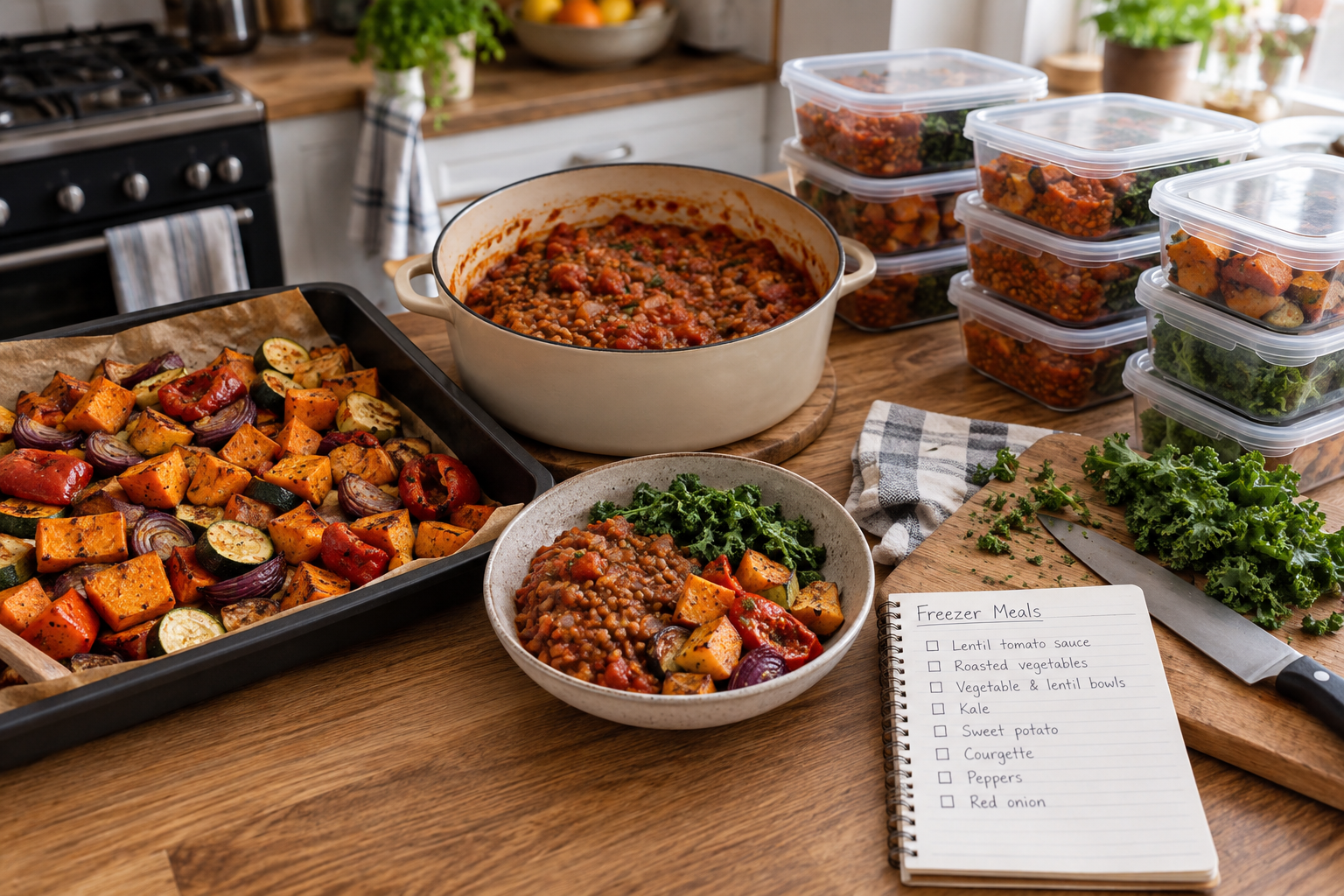
Instead of making one enormous dish, I prefer the idea of preparing building blocks. A tray of roasted vegetables can become a pasta sauce, soup, frittata filling or side dish. Cooked lentils can stretch a cottage pie, chilli or curry. A batch of tomato sauce can be divided and seasoned differently later. This gives variety while still making good use of one oven session.
Check the fridge, freezer and cupboards before writing the shopping list. Plan around ingredients that need using soon, then buy only the gaps. It is surprisingly easy to purchase “batch cooking ingredients” while older food waits behind them.
Use the oven space well
If the oven is already hot, consider what else can cook at the same temperature. Vegetables can roast on another shelf, potatoes can bake for tomorrow’s lunch, or fruit that is past its best can become a crumble. Do not block airflow or overload the oven, and keep raw meat separate to avoid cross-contamination.
For smaller quantities, a microwave, pressure cooker, slow cooker or air fryer may suit the job better, but there is no appliance that is automatically cheapest for every recipe. Capacity, cooking time and power all matter. Use the smallest suitable appliance and avoid repeatedly opening the oven door.
Cool, label and rotate
Divide cooked food into shallow portions so it cools more quickly. Follow food-safety guidance, refrigerate or freeze promptly, and never put a huge steaming pot straight into an overfilled fridge. Label every container with the dish and date. A roll of masking tape and a marker can prevent the familiar freezer mystery of “red sauce—probably”.
Keep a simple freezer list on the door. When a portion comes out, cross it off. Put new food behind older food and plan one “freezer meal” each week. This is the step that turns stored food back into a meal and completes the saving.
Reheat only what will be eaten
Defrost safely and follow the recipe’s reheating guidance. Heat food thoroughly, and be particularly careful with rice. Do not keep cooling and reheating the same large batch. Portioning at the start makes it easier to heat exactly what is needed.
Action points
- Choose two familiar dishes with overlapping ingredients.
- Shop from the fridge and cupboards before visiting the supermarket.
- Fill spare oven space with useful food at a compatible temperature.
- Cool and store portions safely, then label them clearly.
- Keep a freezer list and schedule a weekly use-it-up meal.
Love Food Hate Waste has practical storage, portion and leftover advice. For safe cooling and reheating, consult the Food Standards Agency’s chilling guidance. Batch cooking is not about producing the greatest number of tubs. It is about using one planned cooking session to create food that people will genuinely enjoy later.