How to Find and Fix the Draughts That Make Your Home Feel Colder
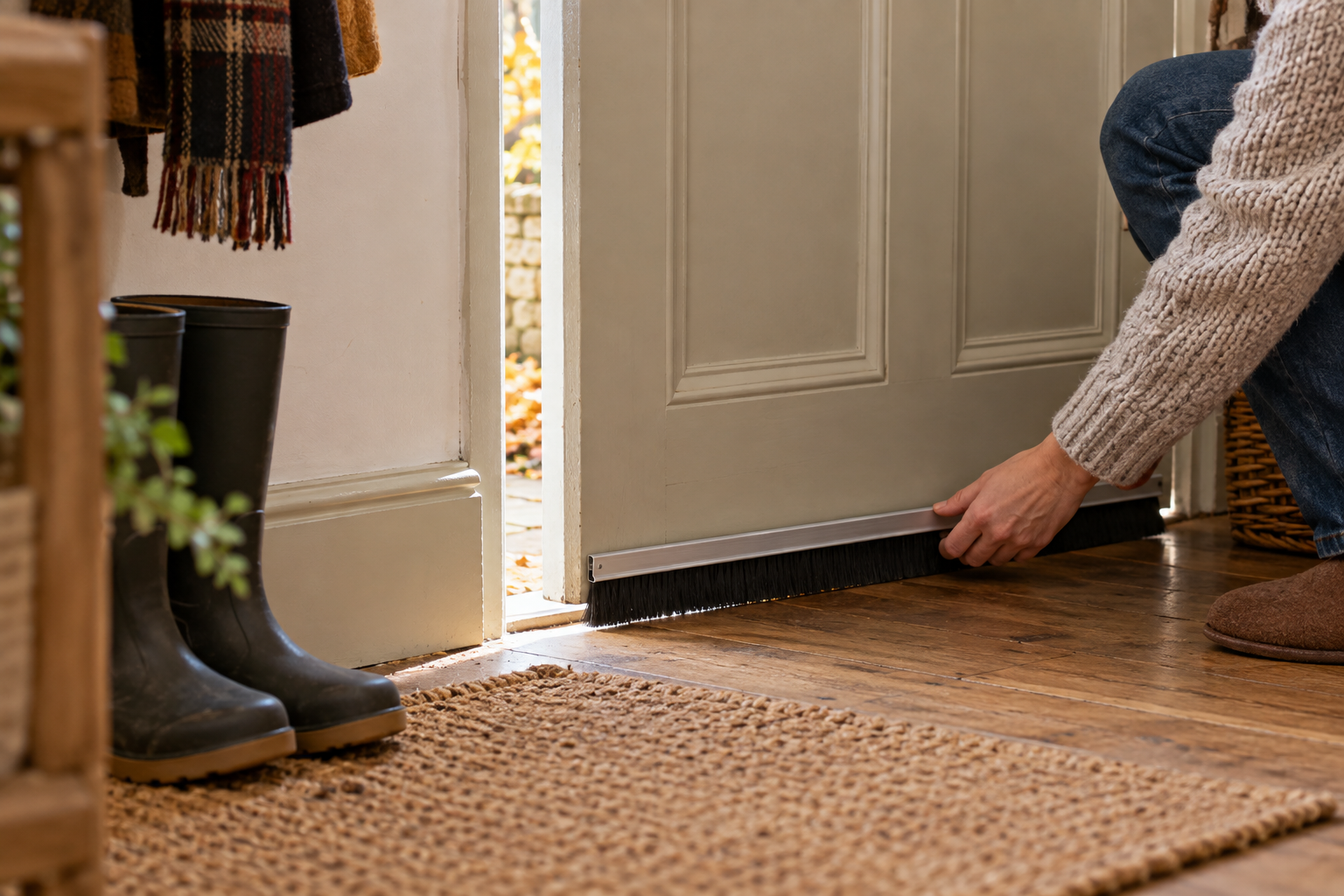
A cold draught can make a perfectly sensible thermostat setting feel uncomfortable. The usual reaction is to turn the heating up, but that means paying to produce more warmth while some of the warmth already in the room is escaping. Before buying an expensive heating gadget, I think it is worth spending an hour finding the small gaps that make a house feel colder than it should.
Draught-proofing is not the same as sealing a home completely. A house still needs planned ventilation, particularly around bathrooms, kitchens, open-flued appliances and permanent air bricks. The aim is to stop accidental gaps around doors, windows and floors while leaving necessary ventilation alone.
Start with a slow walk around the house
Choose a cool or breezy day, close the outside doors and windows, and walk from room to room. Use the back of your hand to feel around window frames, external doors, skirting boards, loft hatches and places where pipes pass through walls. A thin strip of tissue can also reveal moving air. Never use a naked flame to test for draughts.
Write each problem down before buying anything. This avoids coming home with several rolls of the wrong seal. Self-adhesive foam can suit some windows, while brush strips are often more useful at the bottom of a door. A letterbox may need a purpose-made brush or flap. Gaps between floorboards need a flexible product that can cope with movement.
Do the cheap and reversible jobs first
Some of the most useful improvements require very little DIY. Close curtains at dusk, but make sure they do not cover a radiator. Fit a sausage-shaped draught excluder at the bottom of a door if a permanent strip is not suitable. Add a removable seal around a loft hatch. Check whether an unused chimney needs a removable chimney draught excluder, but get advice first and never block a chimney serving a working fire or appliance.
For windows and doors, clean and dry the surface before fitting adhesive strip. The seal should close the gap without making the window or door difficult to operate. If you have to force it shut, the strip is probably too thick. Check the result after a week because loose corners are much easier to correct early.
Think about comfort as well as cost
A draught matters because moving air carries heat away from our skin. Stopping it can make a room feel comfortable at the same temperature. That may allow the heating to run for less time, but the first benefit most people notice is simply that the sofa, desk or bed no longer sits in a chilly stream of air.
If you rent, begin with removable products and tell the landlord about damaged frames, missing seals or larger gaps. Bigger work may be the landlord’s responsibility. If your home has condensation or mould, do not cover vents in an attempt to keep heat in; get advice about ventilation and moisture instead.
Action points
- Choose one windy day and check every external door and window.
- Photograph or list each gap before shopping.
- Start with curtains, door excluders and removable seals.
- Keep air bricks, extractor routes and required vents clear.
- Review the rooms a week later and note whether they feel more comfortable.
The Energy Saving Trust’s draught-proofing guide explains the main areas to check and when professional help may be appropriate. One small strip of seal will not transform a poorly insulated house, but several carefully chosen fixes can make an ordinary home noticeably more comfortable without turning up the thermostat.