Use the Whole Pumpkin: A Low-Waste Halloween Challenge
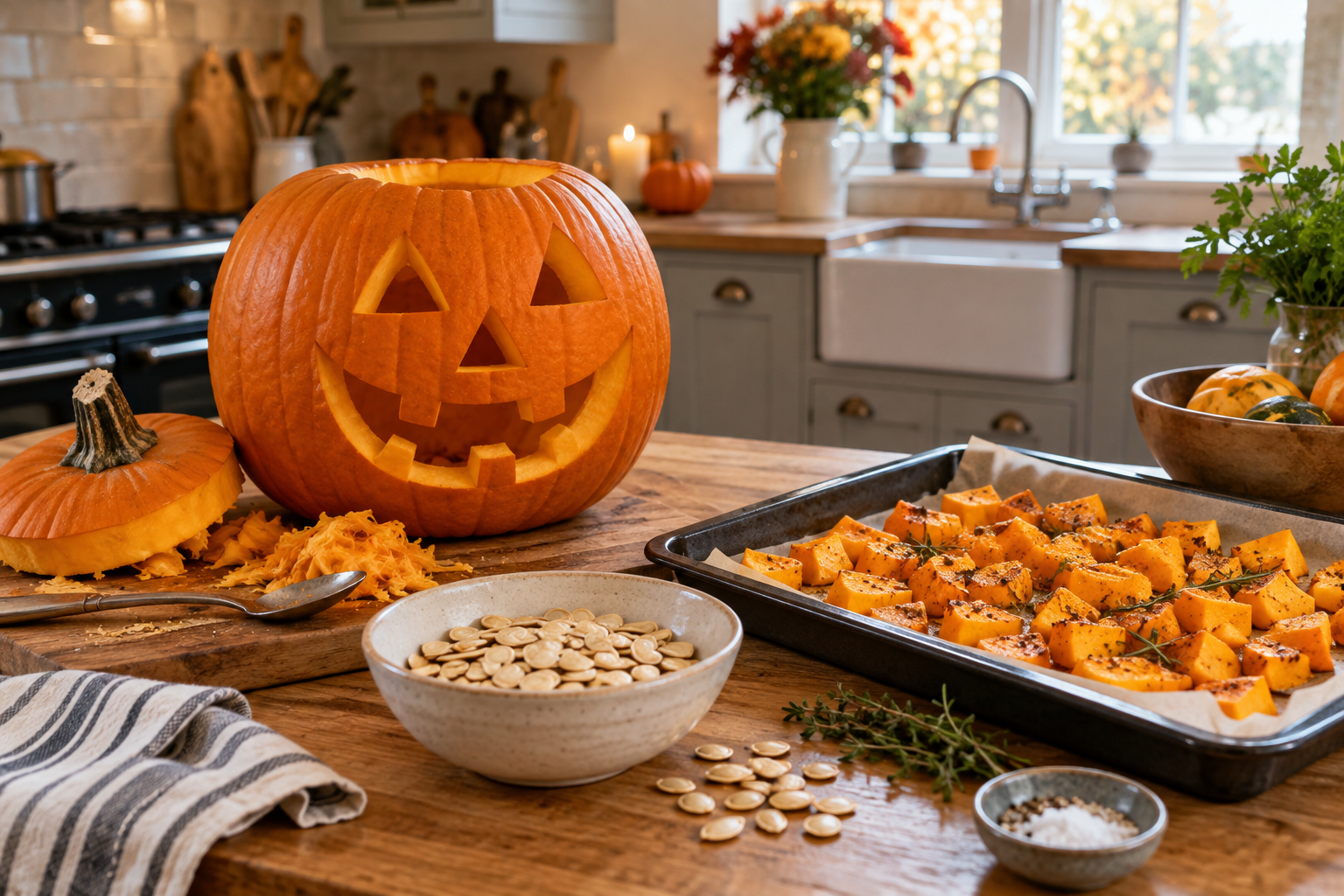
At Halloween, pumpkins are often treated as decorations first and food second. We carve them, light them, enjoy them for an evening and then discover a large, damp vegetable on the doorstep. A better plan begins before the knife comes out: decide which parts will become dinner, which will be roasted, and where the remainder will go.
Not every decorative pumpkin is grown for flavour, but carving pumpkins are still edible when sound and handled hygienically. Choose one without soft patches or broken skin. Wash the outside before cutting so the knife does not carry dirt through the flesh.
Scoop with cooking in mind
Remove the seeds and stringy centre into one bowl, then cut away usable flesh into another. Keep food preparation separate from the part being handled as a lantern. Once a pumpkin has been carved and displayed—especially with a candle inside—do not assume it is safe to eat later. Use the edible flesh before display and refrigerate it promptly.
Pumpkin flesh is mild, which makes it useful rather than boring. Roast cubes with oil and spices, add them to soup, blend them into a pasta sauce or stir them into a curry. If the pumpkin is watery, roasting first concentrates the flavour. Freeze cooked purée in measured portions for later baking or soup.
Do not forget the seeds
Separate the seeds from the fibres, rinse them, dry them thoroughly and roast them with a little oil and seasoning. They can become a snack or a crunchy topping. Follow a reliable recipe and supervise children around a hot oven. The stringy material can go into a home compost bin if appropriate, or into the council food-waste collection.
Use the right end-of-life route
If there is inedible pumpkin left, remove candles, wax, paint, glitter, cocktail sticks and other decorations. Check the local council’s instructions because food-waste and garden-waste rules vary. Do not leave pumpkins in woodland or on verges. Dumped food can upset habitats, attract animals to roads and may not suit local wildlife.
A home compost heap can take chopped pumpkin in modest amounts. Mix the wet pieces with dry “brown” material such as torn cardboard, dry leaves or small woody prunings. A whole pumpkin will become a soggy lump; smaller pieces break down more successfully.
If several households are carving together, share recipes and oven space. One tray of seeds or roasted pumpkin is easier to manage than several tiny batches. It also turns waste reduction into part of the celebration rather than a chore left until everyone has gone home.
Action points
- Choose an undamaged pumpkin and wash it before cutting.
- Remove cooking flesh before carving the lantern.
- Pick one recipe in advance and freeze surplus cooked flesh.
- Roast clean, dry seeds rather than throwing them away.
- Remove all decorations before using food-waste or compost collections.
- Check your council’s rules instead of leaving pumpkins outdoors.
Love Food Hate Waste offers pumpkin storage and recipe ideas. You can find the correct local collection at the government’s recycling collection checker. A Halloween lantern lasts one evening, but with ten minutes of planning the pumpkin can provide several meals and avoid becoming another seasonal bin-bag tradition.