One Meat-Free Day a Week: A Realistic Place to Start
Eating more plant-based meals is often presented as a complete change of identity: one day you eat meat, the next day you are expected to know what to do with every kind of bean. That all-or-nothing approach can make an ordinary household switch feel much harder than it needs to be. One meat-free day a week is a manageable experiment, and it gives us time to discover meals we would choose because they taste good, not because we feel guilty.
Start with a meal that is already nearly there
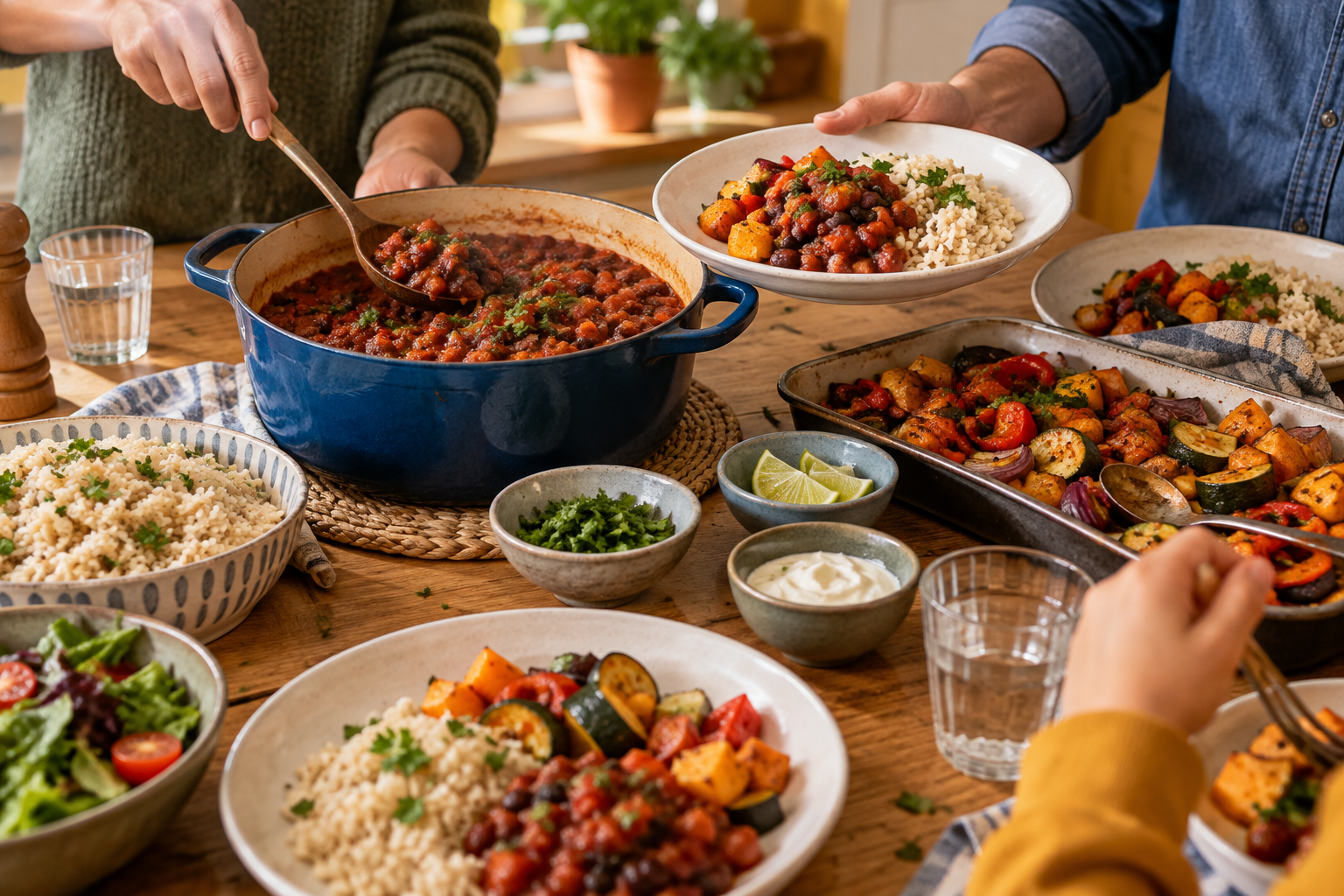
The easiest first step is often a familiar recipe that does not depend on meat for all its flavour. A vegetable curry, lentil soup, bean chilli, tomato pasta, jacket potato or cheese-and-vegetable frittata can feel like a proper dinner rather than a substitute. If a family favourite contains mince, try replacing part of it with lentils or finely chopped mushrooms before attempting a fully meat-free version.
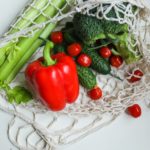
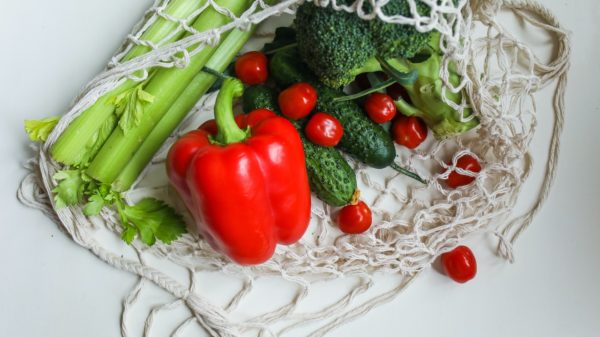
Use flavours the household already enjoys. Garlic, onions, herbs, spices, roasted vegetables, stock and a little acidity can make a simple dish satisfying. Plant-based does not have to mean buying a trolley full of specialist products. Tinned beans, dried lentils, frozen vegetables and seasonal produce are inexpensive starting points.
Think about nutrition as well as carbon
A plate of chips is meat-free, but it is not the balanced meal most of us have in mind. Include a source of protein such as beans, lentils, peas, eggs, tofu, nuts or dairy, depending on the recipe and dietary needs. Add vegetables and a starchy food such as potatoes, rice, pasta or bread. Anyone making a major dietary change, especially during pregnancy or for a medical condition, should seek appropriate advice.
When buying meat alternatives, compare more than the front of the packet. Look at price, portion size, salt, ingredients and packaging. They can be convenient, but ordinary ingredients are often cheaper and more flexible.
Make the day do more than one job
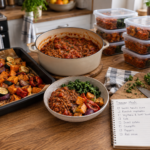
Choose a recipe that produces useful leftovers. Tonight’s lentil bolognese might fill a baked potato tomorrow. Roast vegetables can go into a lunchtime wrap. A pot of soup can use the carrots, celery or herbs that might otherwise be wasted. Saving food from the bin is part of reducing the meal’s footprint.
Keep notes for four weeks. Which meal was easy? Which one cost less than the meat version? What did everyone actually want to eat again? A successful new habit is built from the recipes that survive an ordinary busy evening.
Action points
- Pick one regular day, but move it when family plans require.
- Begin with a familiar curry, chilli, soup, pasta or baked-potato meal.
- Use pulses to replace all or part of the meat in one recipe.
- Plan how any remaining ingredients and leftovers will be used.
- Keep only the recipes people genuinely want to repeat.
The NHS has guidance on healthy vegetarian and vegan diets, and BBC Good Food’s quick vegetarian recipes can provide practical ideas. One day will not solve climate change, but repeating a realistic change 52 times a year matters far more than attempting a perfect week and abandoning it.