A Cheaper, Greener Laundry Routine That Works in a British Autumn
British autumn weather can make laundry awkward. It is cool enough for clothes to take longer to dry, damp enough to worry about condensation, and not always cold enough to justify putting the heating on. The tumble dryer is convenient, but it is also one of the more energy-hungry appliances in many homes. A greener laundry routine needs to work on a wet Wednesday, not only on a sunny washing-line day.
Wash less often—but wash properly
Not every item needs washing after one wear. Airing jumpers, trousers and outer layers can extend the time between washes. When clothes do need cleaning, wait for a sensible full load without cramming the drum. Clothes need room to move, and an overloaded machine may rinse poorly and encourage another wash.
For ordinary mixed laundry, a 30°C programme is often sufficient when the care label and detergent allow it. Bedding, illness-related laundry and heavily soiled items may need a different programme, so this is not a rule to apply blindly. Choose the coolest effective setting, not simply the coolest number on the dial.
Let the washing machine remove more water
Drying becomes easier when the final spin removes more moisture. Check the care labels and use a suitable faster spin for robust cottons. Delicates may need gentler treatment. Shake each item as it comes out of the machine and hang it with space around it; bunched fabric dries slowly and can develop an unpleasant smell.
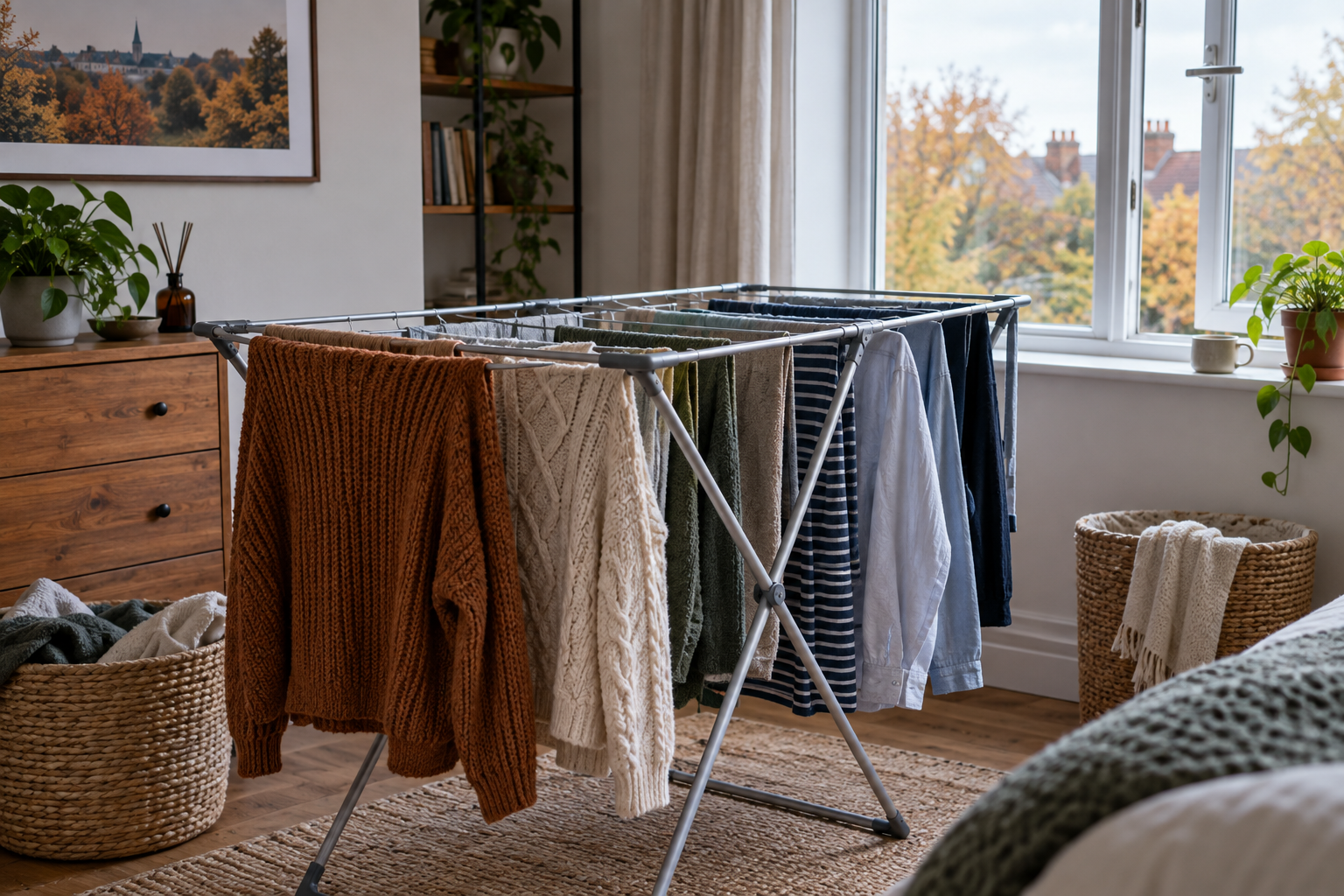
If clothes are drying indoors, put the rack in a ventilated room and close the door to the rest of the house. Use an extractor fan or open a window for short periods when conditions allow. Do not drape wet clothes directly over radiators. That blocks heat from the room and releases a great deal of moisture into the air.
Use the tumble dryer deliberately
Sometimes the dryer is the practical choice, particularly for a busy household or someone with limited mobility. Clean the lint filter after every load, because restricted airflow makes drying slower and can be a fire risk. Untangle items before they go in and avoid mixing heavy towels with lightweight clothes. Sensor programmes can stop when laundry is dry, while a long fixed timer may continue unnecessarily.
Try a “part dry” routine: air-dry the load first and use the machine for a short finishing period if needed. Wool dryer balls may help separate some fabrics, although the biggest gains usually come from a good spin, sensible load size and clean filter. When replacing a machine at the end of its life, compare energy labels and running costs rather than purchase price alone.
Action points
- Air clothes that can be worn again before washing.
- Use a full but not tightly packed drum.
- Choose 30°C where the fabric and hygiene needs allow.
- Select a suitable final spin and shake clothes out immediately.
- Ventilate indoor drying and keep wet laundry off radiators.
- Clean the tumble-dryer filter every time and try partial air-drying.
The Energy Saving Trust has guidance on appliance efficiency, while the NHS explains why damp and mould should not be ignored. A good autumn laundry routine balances energy, fabric care and moisture. The cheapest cycle is no bargain if it has to be repeated, and air-drying is not sustainable if it leaves the home damp.